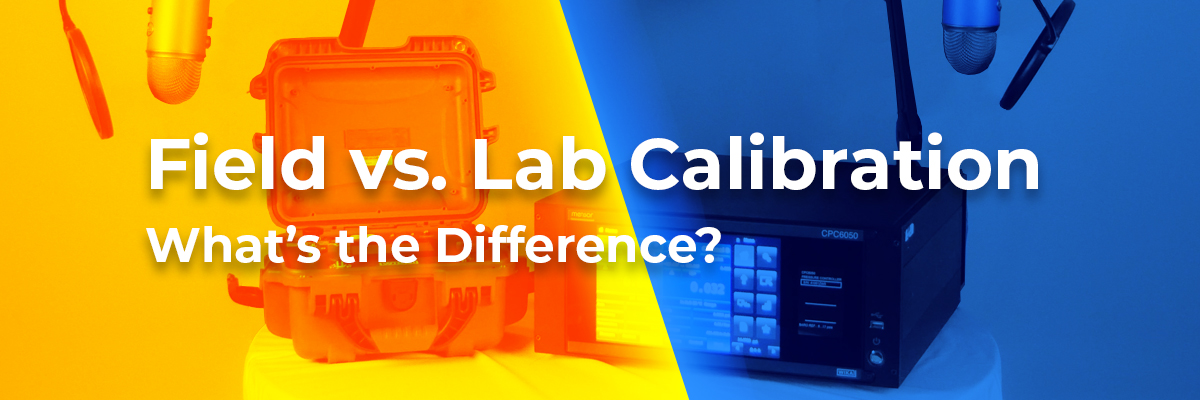
Deciding between field and lab calibration is like choosing between a toolbox and a surgical kit. Each one shines in the environment it was designed for. The right decision ultimately comes down to two key factors: the environment you’re working in and the purpose behind your measurements. Each setting brings its own advantages, limitations, and practical considerations. In this blog, we’ll break down those variables and explore how they should guide your decision, ensuring your calibration approach aligns with the real-world demands of your application. Let’s break it down.
Quick Recap: What is Calibration?
Calibration is the process of comparing an instrument to a known reference standard to verify its accuracy, then adjusting the instrument as needed. Because here’s the truth: every instrument drifts.
Temperature changes, vibration, electrical instability, and simple aging all cause your instrument to drift over time. Calibration ensures your measurements stay within acceptable tolerances and maintain traceability back to recognized standards. In certain industries like pharmaceuticals, aerospace, agriculture, energy, and manufacturing, calibration is not optional. It protects product quality, reduces risk, and supports regulatory compliance. Understanding your industry standards and product-specific requirements is the first step towards staying compliant.
Now, let’s compare your two main options.
The Gold Standard: What is Lab Calibration?
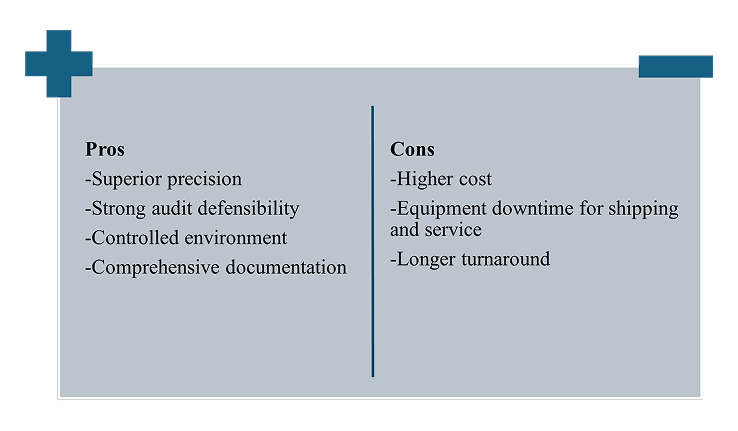
Lab calibration takes place in a controlled environment using high-precision reference standards. Temperature, humidity, and other variables are tightly managed within that controlled environment to minimize measurement uncertainty. That level of control delivers extremely high accuracy and further repeatability.
Why Does it Matter Which Lab Calibration to Choose?
When accuracy is mission-critical, the environment matters. Lab calibration provides the highest achievable accuracy, reduces measurement uncertainty, and ensures complete traceability documentation. In regulated industries, that level of control is necessary for gold standard defensibility. In short, when your instrument’s purpose is to provide a level of accuracy that cannot be compromised, a controlled lab environment offers a level of confidence that field conditions simply cannot match.
Lab Calibration is required when:
- You operate in highly regulated industries
- Tight tolerations are non-negotiable
- Instruments serve as reference standards
- Audit documentation must meet strict requirements
- Measurement errors carry significant consequences
The Convenience Option: What is Field Calibration?
In field calibration, a technician brings portable equipment to you, verifying and adjusting the instruments within your environment. In this case, the instrument is only removed from service for as long as it takes to calibrate it on-site.
It's calibration built around your operation.
Why Does Field Calibration Matter?
Field calibration is about keeping your operation moving. It minimizes disruption while maintaining acceptable accuracy for many applications. When downtime translates directly into lost revenue, faster turnaround and onsite service become the more tempting advantage. You avoid shipping risks, reduce delays, and keep systems running (often at a lower overall cost). For many businesses, that balance between practicality and precision makes field calibration the more strategic choice.
When Should You Choose Field Calibration?
Field calibration is required when:
- Equipment removal is impractical
- Downtime must be minimized
- Tolerances are moderate
- Systems are large or permanently installed
- Operational flow is a priority
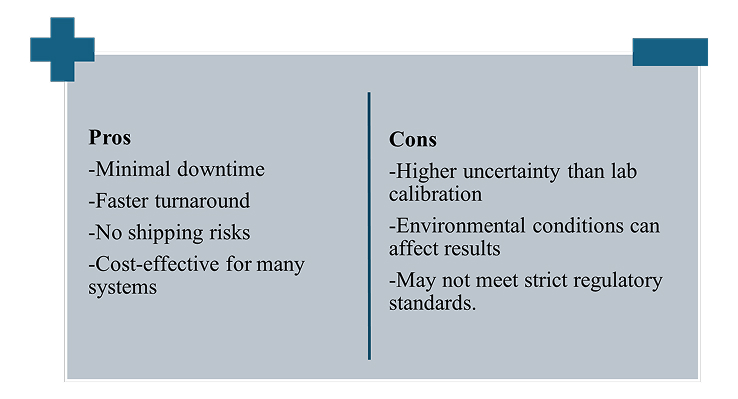
Field calibration trades a bit of precision for convenience. Depending on your regulatory standard requirements, that can be a smart and cost-effective trade-off.
Side-by-Side Snapshot
| Factor | Lab Calibration | Field Calibration |
|---|---|---|
| Accuracy | Highest | Moderate |
| Environment | Controlled | Real-world |
| Downtime | higher | Minimal |
| Cost | Higher upfront | Often lower |
| Compliance | Ideal for strict audits | Suitable for standard requirements |
| Convenience | Lower | High |
The Bottom Line
Again, there is no clear winner. Understanding your environment and measurement purpose is a critical first step. Lab calibration prioritizes maximum precision and compliance confidence. Field calibration prioritizes operational flow and convenience. The decision boils down to how your circumstances influence the production of your product, its tolerance, and its downtime capacity.